SoilForEurope

2017-2018

NUMBER OF ROOMS USED

7

PROJECT DURATION

6 MONTHS

GOALS

Test whether cycles of dehydration and rehydration affect the functioning of soil microbial communities and whether tree species diversity in turn impacts these effects.

Predicting European forest soil biodiversity and its functioning under ongoing climate change

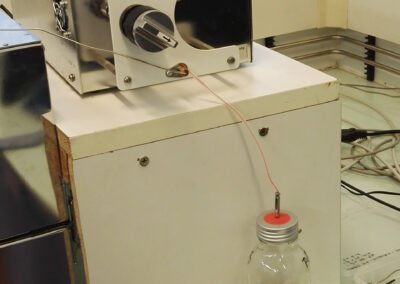
The microcosm experiment was based on two cycles of drying and rewatering (DRW) with soils from forest stands of varying diversity (stands composed of one or three tree species) and from four major types of European forests (boreal forest, mixed hemiboreal forest composed of deciduous and coniferous trees, mixed mountain beech forest and thermophilic Mediterranean forest). Gas flux measurements were taken at key periods during this two-cycle DRW experiment to assess the resistance and recovery of these microbial populations in the face of this climatic stress. This experiment was part of the SoilForEUROPE project.

Researchers

Lauren Gillespie ; Stephan Hättenschwiler ;
Alex Milcu ; Nathalie Fromin

Publications

Gillespie, L. M., Prada-Salcedo, L. D., … Hättenschwiler, S. (2023). Taxonomical and functional responses of microbial communities from forest soils of differing tree species diversity to drying-rewetting cycles. Pedobiologia, 150875.

See

Gillespie, L.M., Fromin, N., … Hättenschwiler, S. (2020). Higher tree diversity increases soil microbial resistance to drought. Communications Biology, 3:377.

See

Gillespie, L.M., Fromin, N., … Hättenschwiler, S. (2020). Higher tree diversity increases soil microbial resistance to drought. Communications Biology, 3:377.

See

This site is registered on wpml.org as a development site. Switch to a production site key to remove this banner.