
Circaflux
2013
NUMBER OF ROOMS USED
12
PROJECT DURATION
3 MONTHS
GOALS
A new study on circadian rhythms
Consequences
Treatments
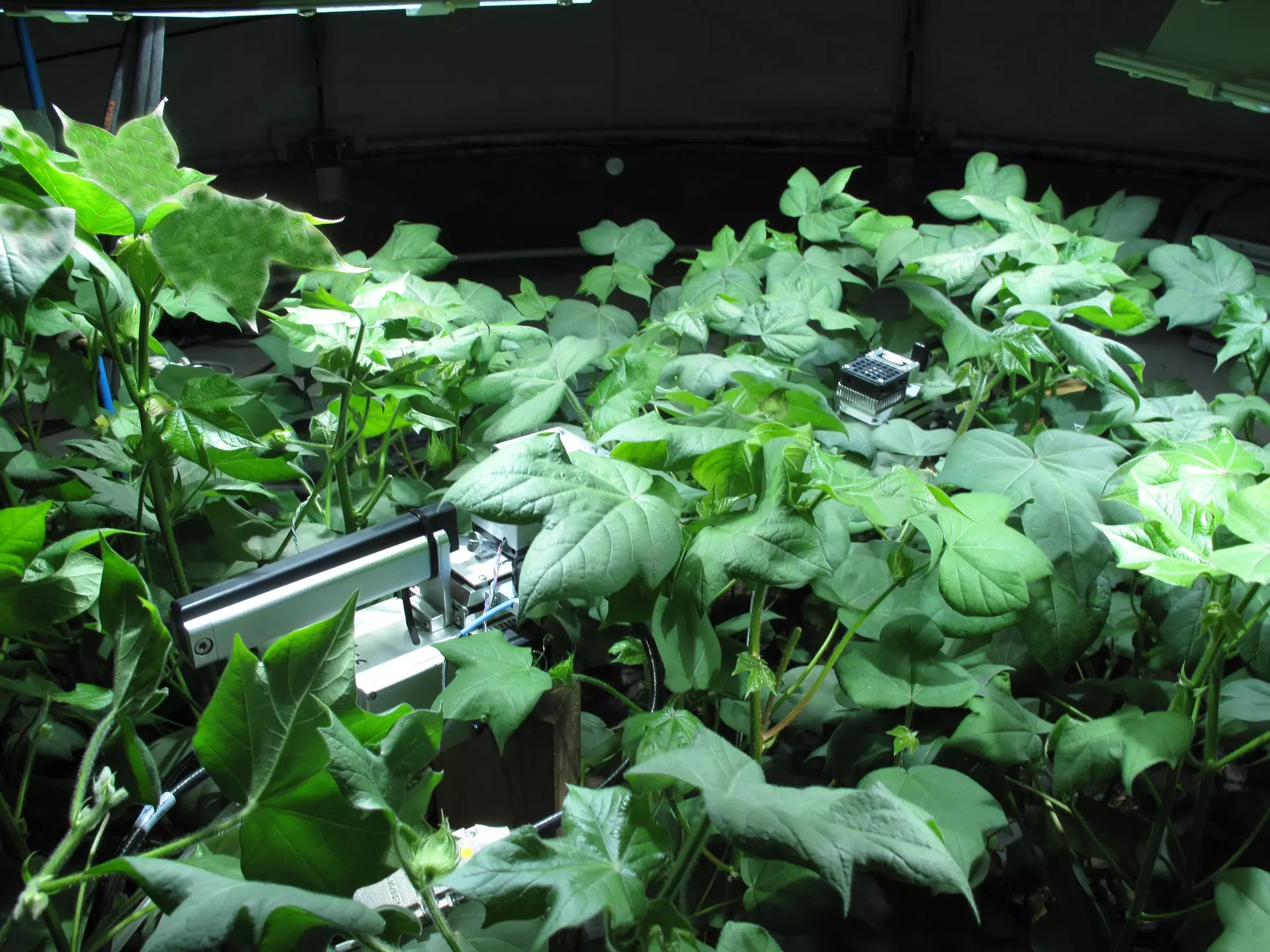
Two crops, cotton and beans, studied in succession; two experimental phases: no water restriction, drought. Each phase lasts two weeks for one crop. The choice of the first crop will depend on the development of the canopies. When the second crop begins to be studied, the first is subjected to drought conditions. This is followed by four weeks of study under good water conditions and then four weeks under drought conditions.
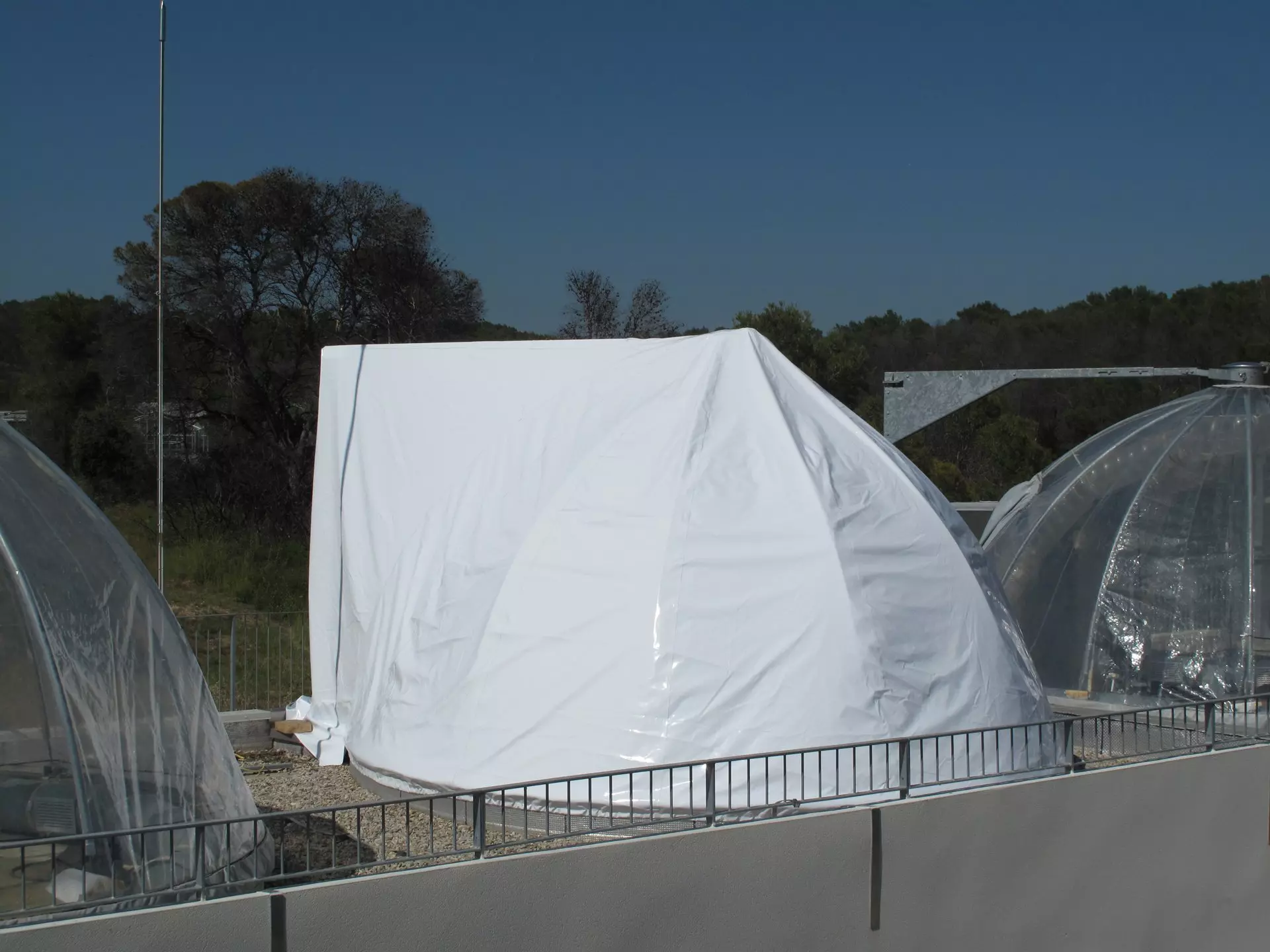
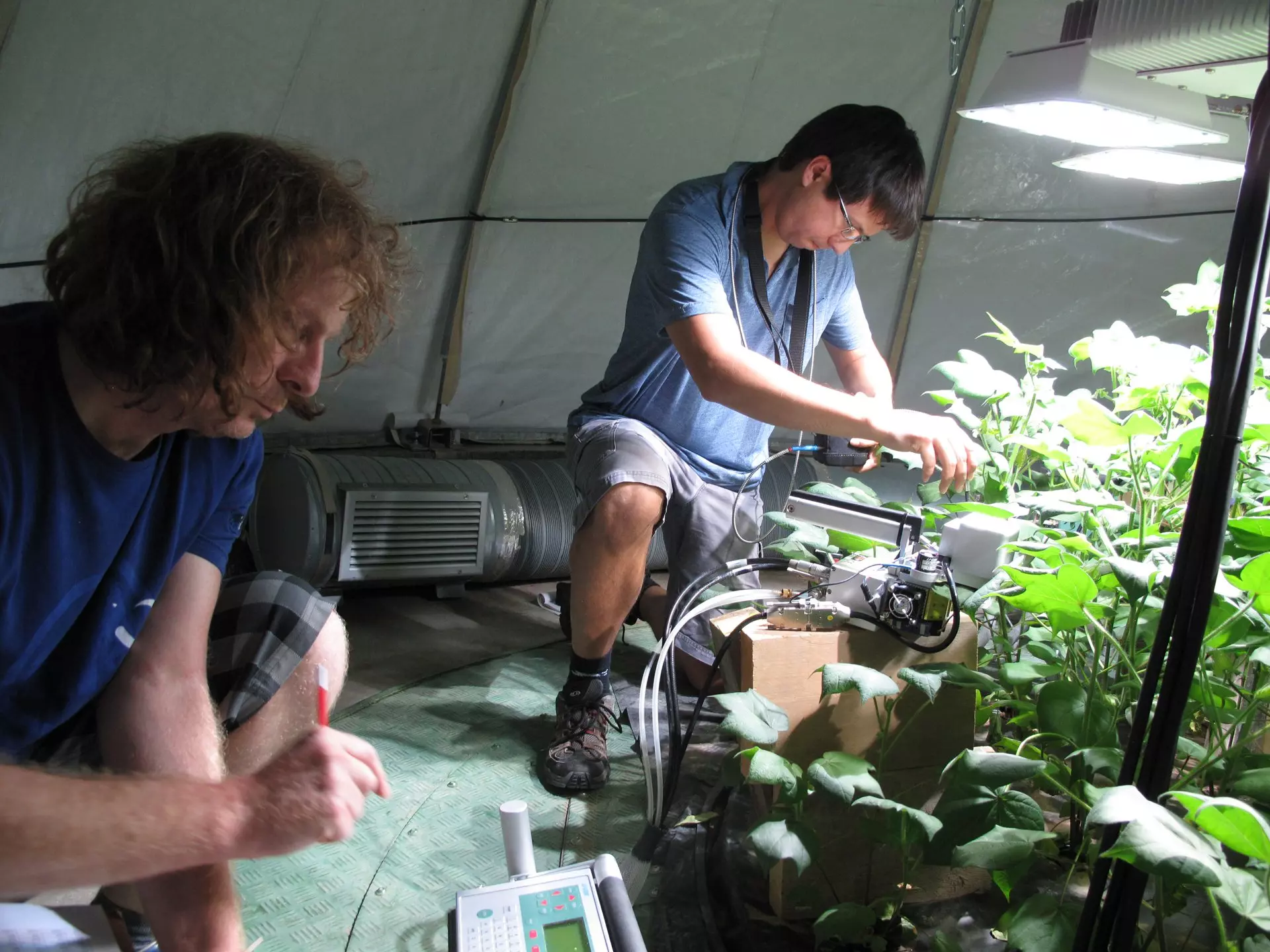
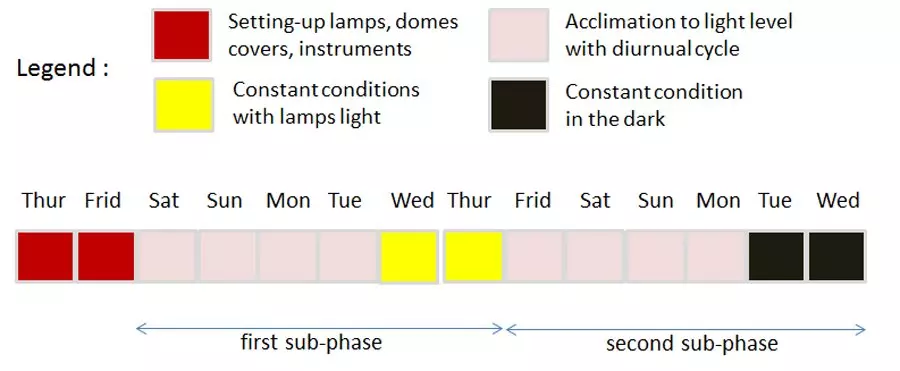
Each phase consists of two sub-phases : one for studying the circadian rhythm under constant light and another for studying the circadian rhythm under constant darkness. The study of the circadian rhythm involves comparing physiology under variable daytime conditions with that under constant conditions. The variable conditions are controlled (created using artificial lighting to ensure similar conditions regardless of the weather outside and to ensure that the maximum light level is equal to the constant light level provided by the lamps).
Each phase lasts two weeks and involves the following sequence of activities each day.
Researchers
Arthur Gessler ; Jacques Roy ; Zachary Kayler ; Juan Pedro Ferrio ; Josu Alday ; Michael Bahn ; Jorge del Castillo ; Víctor Resco de Dios ; Sébastien Devidal ; Sonia García-Muñoz ; Damien Landais ; Paula Martín-Gómez ; Alexandru Milcu ; Clément Piel ; Karin Pirhofer-Walzl ; Serajis Salekin ; David Tissue ; Mark Tjoelker ; Jordi Voltas ; William RL Anderegg
Publications
de Dios, V. R., Roy, J., Ferrio, J. P., Alday, J. G., Landais, D., Milcu, A., & Gessler, A. (2015). Processes driving nocturnal transpiration and implications for estimating land evapotranspiration. Scientific Reports, 5, 10975.
Resco de Dios, V., Gessler, A., … Roy, J. (2016). Circadian rhythms have significant effects on leaf-to-canopy scale gas exchange under field conditions. GigaScience, 5(1), 43.
Gessler, A., Roy, J., … de Dios, V. R. (2017). Night and day – Circadian regulation of night-time dark respiration and light-enhanced dark respiration in plant leaves and canopies. Environmental and Experimental Botany, 137, 14–25.
García-Plazaola, J. I., Fernández-Marín, … Resco de Dios, V. (2017). Endogenous circadian rhythms in pigment composition induce changes in photochemical efficiency in plant canopies. Plant Cell and Environment, 40(7), 1153–1162.
Resco de Dios, V., Anderegg, W. R. L., … Gessler, A. (2020). Circadian Regulation Does Not Optimize Stomatal Behaviour. Plants, 9, 1091.


