
Ecotron
ORIGINS
THE PHYLOGENY OF ECOTRONS
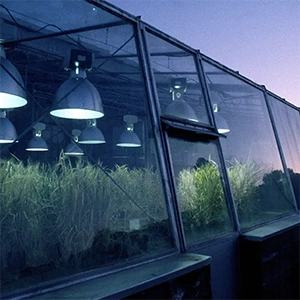
PHYTOTRON 1949
Pasadena
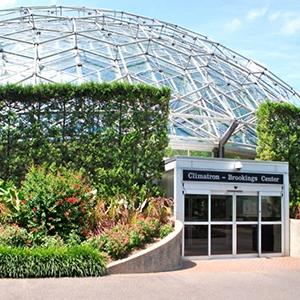
CLIMATRON 1960
Saint-Louis
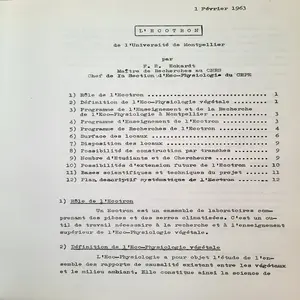
ECOTRON PROJECT
60’s Montpellier
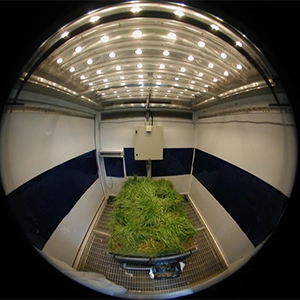
ECOTRON 1992
Silwood Park
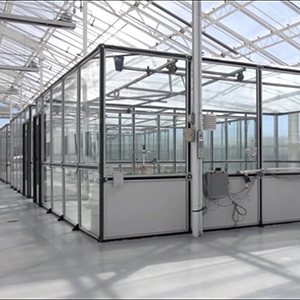
ECOCELLS 1996
Reno
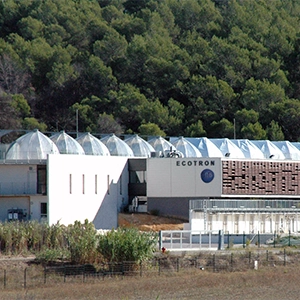
ECOTRON 2010
Montpellier
ORIGIN
Term "Phytotron"
The term “Phytotron” originated during a discussion among biologists in Pasadena. It was coined by analogy with the term “cyclotron,” the large instrument built for physicists in 1941 at Berkeley. The term was first used at the inauguration of the Earhart Plant Research Laboratory, designed by F. Went, to emphasize the parallels between instruments for biologists and physicists—equally expensive and equally vital for society.
Several phytotrons were subsequently built around the world in the early 1960s:
in France (Gif-sur Yvette, 1961),
in Australie (Canberra, 1962),
in the Etats-Unis (Duke University 1968), etc.
Le terme "Ecotron"
Le terme « Ecotron » a été inventé à l’Institut Botanique de Montpellier à la fin des années 50, par son directeur Louis Emberger, pour décrire un projet d’étude sur l’écophysiologie végétale. Un article paru dans le Bulletin de l’UNESCO de septembre 1960 présente le projet.
Mais c’est à partir de 1963 que le premier projet d’un Ecotron est soumis à l’Université de Montpellier par Frode Eckardt (CNRS).
F. Eckardt a travaillé entre 1956 et 1957 avec Fritz Went dans son nouveau Phytotron à Pasadena. De retour en France et certainement inspiré par cette impressionnante installation, F. Eckardt avait l’ambition de développer une installation similaire mais consacrée à l’étude des réponses des plantes et à leur adaptation à l’environnement.
In the late 1950s
In the late 1950s, F. Went moved to St. Louis (Missouri), where he built the Climatron, a large air-conditioned greenhouse designed to showcase ecosystems from around the world. Various climates—from the Amazon to the cool highlands of India—were recreated without physical partitioning of the space. Later, F. Went relocated to Reno (Nevada) to contribute to the development of the Desert Research Institute. His successors, Tim Ball and later Jay Arnone, developed the Ecocells in the 1990s, which operate on principles and analytical methods similar to those of an Ecotron.
F. Eckardt did not succeed in building his Ecotron, but he became a leading international figure in the development of plant ecophysiology methods, particularly the measurement of ecosystem gas exchanges in controlled environments. This was the core activity of Bernard Saugier and André Berger from the ecophysiology laboratory of the CNRS Centre for Phytosociological and Ecological Studies (now the Centre for Functional and Evolutionary Ecology). Jacques Roy was their student, then their colleague. He managed various facilities, always in the same field, and was entrusted with the construction of the Montpellier Ecotron in 1999.
The scientific need for experimental facilities
Regardless of these two lineages of ecotrons (see diagram below), John Lawton of Imperial College Silwood Park built an Ecotron in the early 90s.
Community ecologist John Lawton focused on studying the role of biodiversity in ecosystems. The Silwood Park Ecotron produced numerous publications. Due to reduced funding leading to declining equipment performance, the facility was forced to close in 2013.
The scientific need for controlled-environment experimental facilities remains strong. Extensive growth chamber systems exist in most major universities and agronomic institutes, such as the Duke University Phytotron, Rothamsted’s controlled environment and glasshouse facilities, and the New Zealand Biotron.
Since the construction of the Montpellier Ecotron (2009), other infrastructures based on this principle have emerged:
The Leipzig iDiv Ecotron project in Germany The Ecotron projects at Hasselt University and Gembloux Agro-Bio Tech in Belgium
In France, the CNRS developed a complementary facility to the Montpellier Ecotron: the Île-de-France Ecotron, which includes the capability to conduct experiments on aquatic ecosystems.
Would you like more information about our current projects?
MACROCOSMS, MESOCOSMS, MICROCOSMS, ISOFLUX

